System font stack CSS organized by typeface classification for every modern OS
The fastest fonts available. No downloading, no layout shifts, no flashes — just instant renders.
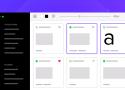
All platforms. Professional features. Beautiful UI. Totally free. FontBase is the font manager of the new generation, built by designers, for designers.
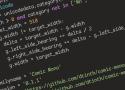
A legible monospace font… the very typeface you’ve been trained to recognize since childhood. This font is a fork of Shannon Miwa’s Comic Shanns (version 1).
Webfonts were great when most computers only had a handful of good fonts pre-installed. Thanks to font creation and buying by Apple, Microsoft, Google, and other folks, most computers have good - no, great - fonts installed, and they're a great option if you want to not load a separate font.
A Hassle-Free Way to Self-Host Google Fonts
You may have found this page after seeing someone post glitchy text (ļ̵͝i̴͋ͅk̵̡̚e̵̝̎ ̷̡́ẗ̸̠h̵͚̊i̸͈̐s̴̬̚) in the comments of a blog post, youtube comment, or other social media page. And now that you're able to genertate your own creepy ("zalgo") text using the above translator, you're probably wondering: How is text converted into weird glitch text like this?
Well, the story starts with Unicode. Unicode is an industry standard that manages all of the characters that you view on most of your electronic devices. Unicode contains certain special characters called "combining character". Rather than being their own individual letters, these characters are added to other letters and symbols. The result: we can add weird glitchy marks to your text.
In the study of written language, the marks that are added are called "diacritics". Though they are useful for generating crazy text which we can copy and paste into the comments of a funny cat video on YouTube, they're also very useful when we want to augment the way a letter is pronounced. By adding a diacritic, we can specify that the letter is pronounced in a different way than usual.
JuliaMono - a monospaced font for scientific and technical computing
JuliaMono is a monospaced typeface designed for programming in the Julia Programming Language and in other text editing environments that require a wide range of specialist and technical Unicode characters. It was intended as an experiment to be presented at the 2020 JuliaCon conference in Lisbon, Portugal (which of course did't happen).
A strong, neutral typeface for text or display.
GNU Unifont is part of the GNU Project. This page contains the latest release of GNU Unifont, with glyphs for every printable code point in the Unicode Basic Multilingual Plane (BMP). The BMP occupies the first 65,536 code points of the Unicode space, denoted as U+0000..U+FFFF. There is also growing coverage of the Supplementary Multilingual Plane (SMP), in the range U+010000..U+01FFFF, and of Michael Everson's ConScript Unicode Registry (CSUR) with Rebecca Bettencourt's Under-CSUR additions.
undefined medium is a free and open-source pixel grid-based monospace typeface suitable for programming, writing, and whatever else you can think of … it’s pretty undefined.
It is inspired by many 5×7 pixel grid typefaces, especially Gilles Boccon-Gibod’s MonteCarlo, which is unfortunately, since 2010, no longer maintained.
The 400+ character set fully supports Latin Extended-A with Western European, Central European, and South Eastern European languages.
In addition, there’s many typographic symbols, mathematical symbols, superscripts, double-spaced fractions, a copyleft symbol, and a capital sharp s character.
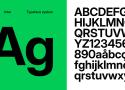
The Inter font family
Inter is a typeface specially designed for user interfaces with focus on high legibility of small-to-medium sized text on computer screens.
The family features a tall x-height to aid in readability of mixed-case and lower-case text. Several OpenType features are provided as well, like contextual alternates that adjusts punctuation depending on the shape of surrounding glyphs, slashed zero for when you need to disambiguate "0" from "o", tabular numbers, etc.