This is a community-run resource to help you fix access to the internet and the Windows Update service on earlier versions of Windows.
Since Windows XP was discontinued in 2014, followed by Windows 7 in 2020, Microsoft’s support for their earlier OSes has significantly dwindled. As XP and earlier don’t officially support modern security improvements, such as the SHA256 hash algorithm required by modern SSL and Authenticode certificates as of 2019, much of the internet has become inaccessible to these devices. Adding insult to injury, Microsoft actively removed many downloads for XP and earlier versions in 2020. In effect, working with these OSes is now incredibly difficult.
Windows Update provides many optional and recommended updates, in addition to drivers for your system, but Windows XP and 2000 can only install critical security updates through the built-in Automatic Updates feature. Legacy Update revives the original Windows Update website - the only way to see and install every update available for your system.
StatiCrypt uses AES-256 and WebCrypto to encrypt your HTML file with your long password, and returns a static page including a password prompt and the javascript decryption logic that you can safely upload anywhere

Malwarebytes AdwCleaner
The world’s most popular adware cleaner finds and removes unwanted programs and junkware so your online experience stays optimal and hassle-free.
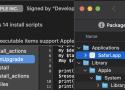
An Application for Inspecting macOS Installer Packages
Every macOS Installer Package Looks the Same
Consider a few macOS Installer packages:
4 packages that don't look any different
One contains a useful and well-designed product, which can't be easily installed using drag-and-drop.
One contains well-intentioned software that will nevertheless splatter pieces all over your startup disk.
One contains a vital component — like a scanner driver — but will also install a handful of annoying, unwanted applications that the driver vendor distributes in return for “promotional consideration.”
One contains malware that will infest your system and your network, and probably ruin your week.
Which one is which? ¯_(ツ)_/¯ The answer in macOS has traditionally been “install it and find out!”
The built-in security features of macOS — such as Gatekeeper, package signing and most recently, notarization — might rule out malware ... if you're lucky. But there's still a huge gray area between that and a well-designed package.

A vast collection of security tools
fully automatic checks of firmware and security systems
Secretive is an app for storing and managing SSH keys in the Secure Enclave. It is inspired by the sekey project, but rewritten in Swift with no external dependencies and with a handy native management app.
Sandboxie is a sandbox-based isolation software for 32-bit and 64-bit Windows NT-based operating systems. It creates a sandbox-like isolated operating environment in which applications can be run or installed without permanently modifying local & mapped drives or the windows registry. An isolated virtual environment allows controlled testing of untrusted programs and web surfing.
The trustless password manager
This tool will help you to create a Firefox profile with the defaults you like.
You select which features you want to enable and disable and in the end you get a download link for a zip-file with your profile template. You can for example disable some functions, which send data to Mozilla and Google, or disable several annoying Firefox functions like Mozilla Hello or the Pocket integration.
Each Setting has a short explanation and for the non obvious settings links to resources describing the feature and the possible problems with it.
SeKey is a SSH Agent that allow users to authenticate to UNIX/Linux SSH servers using the Secure Enclave
Burp Suite is a leading range of cybersecurity tools, brought to you by PortSwigger. We believe in giving our users a competitive advantage through superior research.
Generates self-contained HTML files protecting secret text content. - dividuum

A command line tool and library for transferring data with URL syntax, supporting HTTP, HTTPS, FTP, FTPS, GOPHER, TFTP, SCP, SFTP, SMB, TELNET, DICT, LDAP, LDAPS, FILE, IMAP, SMTP, POP3, RTSP and RTMP. libcurl offers a myriad of powerful features - curl
Who?
Security Headers was created by me, Scott Helme. I'm an Information Security Consultant and blogger based in the UK and you can regularly find me writing on my blog at scotthelme.co.uk or you can follow me on Twitter @Scott_Helme.
I built Security Headers after deploying security headers like CSP and HSTS to my own site. I wanted a quick and easy way to check if other sites were using these headers and I figured I'd turn it into a useful tool for everyone to use!
Why?
There are services out there that will analyse the HTTP response headers of other sites but I also wanted to add a rating system to the results. The HTTP response headers that this site analyses provide huge levels of protection and it's important that sites deploy them. Hopefully, by providing an easy mechanism to assess them, and further information on how to deploy missing headers, we can drive up the usage of security based headers across the web.
How?
The site is written in PHP using the CodeIgniter MVC framework and powered by DigitalOcean Droplets. You can use my DigitalOcean referal link to get $10 in free credit and help support this service! The site is entirely funded out of my own pocket so if you'd like to help support it, please get in touch.