Very fast. Zero telemetry.
Lightweight, natively built with WebKit, made for you and your Mac.1
Industry-leading battery life, privacy respecting by design and native support for web extensions.2
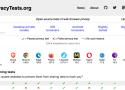
Due to EU regulations and increased awareness of online privacy, every website must get user's permission before installing tracking cookies. If you surf anonymously or if you delete cookies automatically every time you close the browser, websites will ask for that permission again and again, and it will soon become very irritating to click the same I agree buttons every day.
This browser extension removes cookie warnings from almost all websites and saves you thousands of unnecessary clicks!
In most cases, it just blocks or hides cookie related pop-ups. When it's needed for the website to work properly, it will automatically accept the cookie policy for you (sometimes it will accept all and sometimes only necessary cookie categories, depending on what's easier to do). It doesn't delete cookies.
Please educate yourself about cookie related privacy issues and ways to protect yourself and your data. For example, you can block 3rd party cookies, install ad blocking extensions and then block tracking tools, delete browsing data regularly, enable Tracking Protection in your browser etc.
This tool will help you to create a Firefox profile with the defaults you like.
You select which features you want to enable and disable and in the end you get a download link for a zip-file with your profile template. You can for example disable some functions, which send data to Mozilla and Google, or disable several annoying Firefox functions like Mozilla Hello or the Pocket integration.
Each Setting has a short explanation and for the non obvious settings links to resources describing the feature and the possible problems with it.
Attackers use GPS and device metadata to profile their victims. It also increases image file size. Sweep it away, with ExifCleaner.
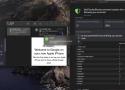
MailTrackerBlocker is a macOS Apple Mail plugin (i.e. mailbundle) to block read trackers disguised as "spy pixels".
Most commercial trackers can be reliably blocked through a blacklist of known URL patterns. Failing that, MailTrackerBlocker applies a generic regex filter for 1x1 images. Read more about how email pixel tracking works.

Tech and social media is having a big impact on our society. While many innovative technology inventions are improving our lives, there is increasing awareness on negative impacts that come with these trends, such as social media addiction, mental health issues, and social erosion. To address these problems, a world-class team of deeply concerned former tech insiders led by Tristan Harris have created The Center of Humane Technology.
This list focuses on (mostly open-source) projects that are directly related to humane tech topics. Please read the guidelines for contributing before sending your PR's.
Important: The resources presented below were collected in good faith by the contributors to this list in hopes they may prove useful to you. But as per the License we can give no guarantees on the quality or fitness of the software that is referenced. So inform yourself properly before installing anything, and if you encounter something that is inappropriate or wrong, then please file an issue in our Issue Tracker so we can take appropriate action. Thank you!
TrackMeNot is a lightweight browser extension that helps protect web searchers from surveillance and data-profiling by search engines. It does so not by means of concealment or encryption (i.e. covering one's tracks), but instead by the opposite strategy: noise and obfuscation. With TrackMeNot, actual web searches, lost in a cloud of false leads, are essentially hidden in plain view. User-installed TrackMeNot works with Firefox and Chrome browsers, integrates with all popular search engines, and requires no 3rd-party servers or services.
LocalCDN is a web browser extension that emulates Content Delivery Networks to improve your online privacy. It intercepts traffic, finds supported resources locally, and injects them into the environment. All of this happens automatically, so no prior configuration is required.
Privacy Pass interacts with supporting websites to introduce an anonymous user-authentication mechanism. In particular, Privacy Pass is suitable for cases where a user is required to complete some proof-of-work (e.g. solving an internet challenge) to authenticate to a service. In short, the extension receives blindly signed ‘passes’ for each authentication and these passes can be used to bypass future challenge solutions using an anonymous redemption procedure. For example, Privacy Pass is supported by Cloudflare to enable users to redeem passes instead of having to solve CAPTCHAs to visit Cloudflare-protected websites.
The blind signing procedure ensures that passes that are redeemed in the future are not feasibly linkable to those that are signed. We use a privacy-preserving cryptographic protocol based on ‘Verifiable, Oblivious Pseudorandom Functions’ (VOPRFs) built from elliptic curves to enforce unlinkability. The protocol is exceptionally fast and guarantees privacy for the user. As such, Privacy Pass is safe to use for those with strict anonymity restrictions.

Secure your email server with STARTTLS Everywhere! Your email service can be insecure in numerous different ways. The service below performs a quick check of your email server's security configuration, including whether STARTTLS is supported, and whether it may qualify for the STARTTLS Policy List.
Fsociety Hacking Tools Pack
A Penetration Testing Framework, you will have every script that a hacker needs
Want create site? Find Free WordPress Themes and plugins.
Why we started OpenSCHUFA, why you should care about credit scoring & how you can help.
Germany’s leading credit bureau, SCHUFA, has immense power over people’s lives. A low SCHUFA score means landlords will refuse to rent you an apartment, banks will reject your credit card application and network providers will say ‘no’ to a new Internet contract. But what if your SCHUFA score is low because there are mistakes in your credit history? Or if the score is calculated by a mathematical model that is biased?
The big problem is, we simply don’t know how accurate SCHUFA’s data is and how it computes its scores. No one does, not even the German government. OpenSCHUFA wants to change this by analyzing thousands of credit records.
A privacy-respecting, hackable metasearch engine.